
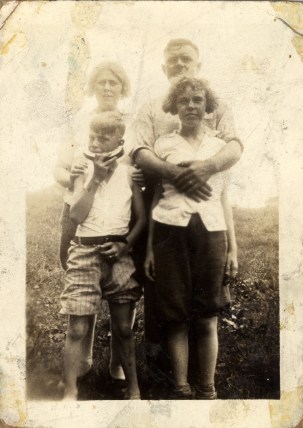
Happy Mother’s Day to all of you Mamas out there! I thought I’d post a few pictures of moms and kids from our families.
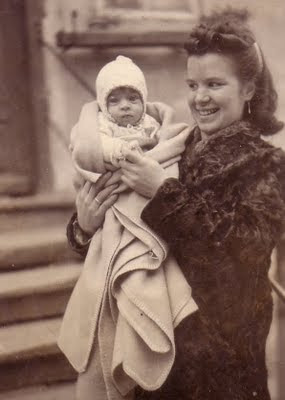

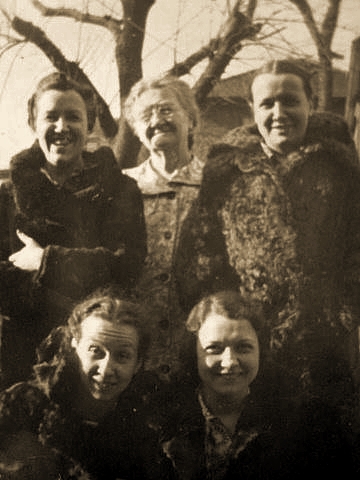
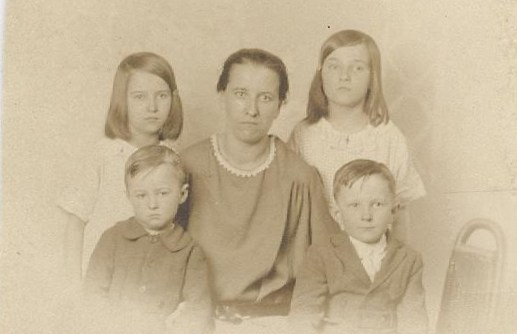
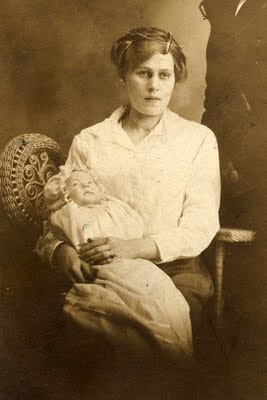
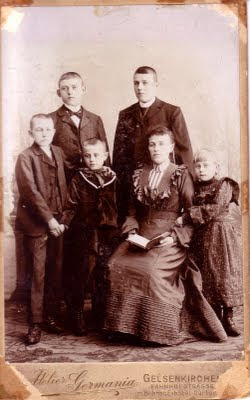
© 2019 LAURA CUBBAGE-DRAPER. ALL RIGHTS RESERVED.
Happy Mother’s Day to all of you Mamas out there! I thought I’d post a few pictures of moms and kids from our families.
© 2019 LAURA CUBBAGE-DRAPER. ALL RIGHTS RESERVED.
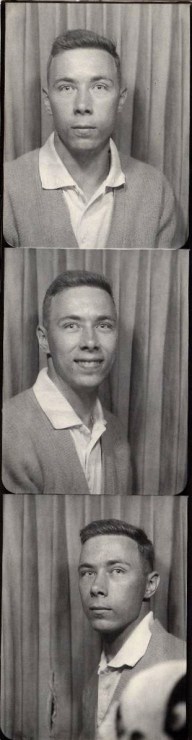
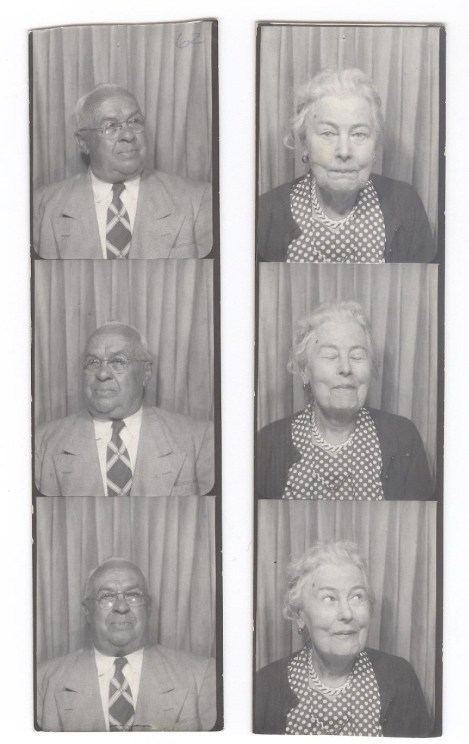
I was looking for a few old photos and came across these photo booth pictures! They were taken in Asbury Park 1962 of my mother, my father, and his grandparents Mem and Pap (Elizabeth Linneman Speck and Charles Merz). My parents were dating at this time, and Mem and Pap were out visiting from Pittsburgh. My favorite frame is the last one of my great-grandmother!

Have you found any photo booth pictures in your family treasures?
© 2019 LAURA CUBBAGE-DRAPER. ALL RIGHTS RESERVED.
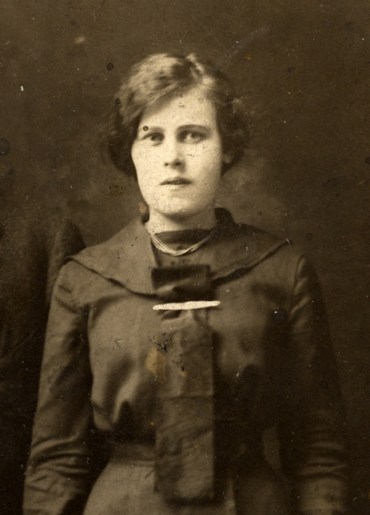 Elisabeth Maria Linnemann was my paternal great-grandmother. She died 53 years ago this week (20 April 1966). I have been thinking about her a lot lately as I’ve been using her as an example of genealogy records in my Intro to Genealogy presentations. I am almost finished with an extensive biography of her, with records and images, but that’s a bit long for here.
When we look into our family history, we often learn things about ancestors that we didn’t know, or that our parents and grandparents didn’t know. What often strikes me about Elizabeth is that she was the only biological grandparent that my father got to know (his other three grandparents shortly before his birth). He called her “Mem” and has shared stories about her, yet there are details about Elizabeth and her family that I have uncovered which my father never knew.
Elizabeth has shown up in some of my earlier posts – stories previously known and unknown about her husband, brother and father. Below are some of the previously unknown details about Elizabeth and her family that I have uncovered and been able to share with my Dad:
Mem was the only daughter of Gerhard Linneman and Barbara Elizabeth Nilkowski. My Dad knew of her brothers that lived in Monessen – Gerhard, George and Christian (Christ) – and has faint memories of seeing “Uncle Christ”. He did not know that she had a brother, William, who moved to Chicago, and that Mem had two brothers who died in Germany, both named Rudolph. My Dad now understands why his Uncle Frank’s middle names was Rudolph.
Mem’s father Gerhard was her mother Elizabeth’s second husband. Her first husband was Christan Fasel, who died a few months before their son Christian was born. Elizabeth married Gerhard within a year of his birth, and Christian was always known as Christian Linnemann. Uncle Christ was Elizabeth’s half-brother.
Mem and her first husband Frank had a third child, Alma Mary, who lived for only one day in 1916. Agnes Elizabeth (his mother) was born in 1915, and Frank Rudolph was born in 1918.
Mem’s father Gerhard committed suicide. This was a complete shock to my father, and he believes it was unknown to many in his family. I wrote about Gerhard’s death here. My dad grew up with Mem, remembered some of her brothers, but had never heard of the suicide. In fact, he didn’t even know that her father had ever been in the U.S. – Gerhard was never mentioned.
Mem graduated from nursing school in 1926, when she was about 29 years old. A newspaper article mentioned that the class of six women had been in training for three years at the Memorial Hospital in the neighboring town of Charleroi, as well as studied at the Children’s Hospital in Pittsburgh. This is an especially notable unknown detail about Mem since her daughter Agnes (my father’s mother) also went to nursing school after they moved to New Jersey. It is unknown how long she worked as nurse, but must have stopped by the time my father was born and/or living with her in the 1940s.
Mem’s first husband Frank had a moving and storage company in Monessen, which my Dad knew about. He did not know that the company ran into some troubles in the 1920s. A front-page newspaper article announced the settlement of a case against Frank and his company. A man was accidentally killed by a railroad rail that was dropped by an employee. The widow received $9000 in the settlement. Two years later, another article reported a man was critically injured after being crushed by a truck operated by Frank. By 1936, there was a notice of a final bankruptcy hearing for Frank.
Even when we feel certain that we know about our family history, it is possible to uncover surprises or unknown details about our ancestors. While none of these were truly shocking family secrets (well, maybe the suicide), the others were unknown details that helps us to understand who Mem was, and how these details may have affected her as a mother and grandmother.

Mem and Pap (her second husband) were my father’s grandparents – the ones he celebrated holidays with, lived with, and connected with as a boy and then as a young man. The details about her life – both known and previously unknown – are parts of her story. I am thankful for who she was and the family that she raised, including my grandmother and father.
Have you uncovered any hidden details about ancestors – big or small – that were unknown to your family?
© 2019 LAURA CUBBAGE-DRAPER. ALL RIGHTS RESERVED.
This post is part of Amy Johnson Crow’s “52 Ancestors in 52 Weeks” family history blogging challenge. The prompt for this week is “Brick Wall.”
My great-grandfather Frank Speck died 79 years ago yesterday – 7 April 1940 – in Monessen, Pennsylvania. I know much about his life in Monessen, yet almost nothing about him before he appeared around 1915.
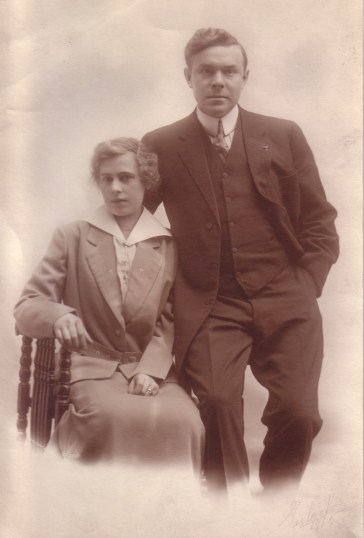
Frank was born around 1886-1888 in Germany, although there is some speculation about his place of birth. His death certificate and funeral card both report his birth date as 21 May 1887. Frank married my great-grandmother, Elizabeth Linnemann, in January of 1915. Their marriage license application records that he was a hotel clerk living in Monessen, and he was born in Germany. His parents were deceased but named them as Peter and Agnes (no maiden name). Frank and Elizabeth’s daughter Agnes was born just over nine months after they married. I am fairly certain that Frank was working as a hotel bartender in nearby Manor (Westmoreland County) in 1910.

I have yet to locate a passenger record for Frank’s arrival into the US. Three census records for Frank have three different immigration dates (1894, 1904, and unknown). I also wonder if he could have Americanized or changed his name after he arrived in the United States. He used the name Frank Friedrich Speck, but could it have been Friedrich and he went by Frank? Or was his last name Specht or Speckmeyer or something else? I have yet to locate a record that gives the name of a town, or county, or region of Germany. Plus, the borders of Germany had changed so much – could he be from Poland? The 1910 census recorded Frank as “Aust. Polish.”
My father remembers a time when he was young and his grandmother Elisabeth (Frank’s widow) had some papers out. He remembers seeing what would have been Frank’s birth certificate and said something to the effect of “He was born in Poland?” His grandmother put the papers away and never really answered him. I’ve gone through my parents’ pictures and records from my Dad’s family and haven’t been able to locate that birth certificate. My Dad said that his father tossed a bunch of old papers many years ago – ugh!
I am hoping that using DNA data and matches could help me narrow down some possibilities for Frank’s family. Unfortunately, my father is the only living descendant of Frank (his son never had any children), so it may take a while or be difficult to weed out other ancestors. Frank’s obituary said that he was survived by a sister in Germany (unnamed). I really need to learn chromosome mapping and DNA Painter (I’ll report on that when I do!).
Another place that I need to research further are Pennsylvania court records. I have found some newspaper articles about Frank and his company, which was involved in some lawsuits, plus a bankruptcy case. I wonder if any of those records may hold a clue or a more specific place of birth for Frank. Also, I need to take another look for local church records in Monessen.
Frank’s origin is still a mystery … a brick wall that I plan to take down a little bit at a time. I’ll keep you posted of my progress.
Which ancestor has you stumped??
© 2019 LAURA CUBBAGE-DRAPER. ALL RIGHTS RESERVED.
The women in our families have likely done the majority of the cooking, and many of us have fond memories of a mother, grandmother, or auntie in the kitchen making a favorite recipe. My father remembers his grandmother Mem (Elizabeth Linneman Speck Merz) making City Chicken as a child when they lived in Pittsburgh.
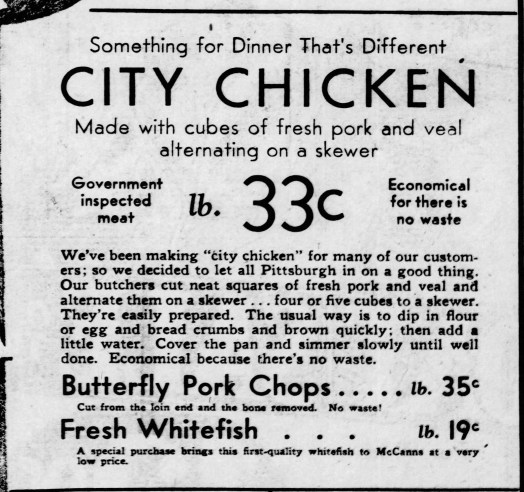
City Chicken actually isn’t chicken, but cubed beef, pork and/or veal on wooden skewers to resemble drumsticks. This recipe may have originated in Western Pennsylvania, and was popular in other areas of Pennsylvania, Ohio, Michigan, and Western New York. Early recipes for City Chicken show up in the 1930’s post-Depression Era. Chicken was costly or hard to find, while the other meats (especially pork) were generally cheaper.
Here is an ad from 1932 for City Chicken from McCanns in Pittsburgh: [1]
My father remembers that Mem made it with pork, veal and beef. My parents have continued to cook this meal today, although they usually only use pork. Here is the Cubbage version (there was no written recipe):
City Chicken
1″ to 1 1/4″ cubes of pork loin (and veal or beef) – put 4 on a skewer
dredge in flour
dip in beaten egg
roll in flavored bread crumbs
brown on all sides
put a grate in bottom of a pot and add tiny bit of water
bake at 400F until the meat is done (not sure how long)- just test it with a fork.
I don’t have a picture of our City Chicken (I will be sure to take one next time we have it!). Instead, here is a picture of Mem in her kitchen – probably when she lived on Thelma Street in Pittsburgh.

SOURCES:
[1] “City Chicken” in McCanns advertisement, The Pittsburgh Press, 1 November 1932, p. 6, col. 2; digital image, Newspapers.com (https://www.newspapers.com : 26 March 2019).
© 2019 LAURA CUBBAGE-DRAPER. ALL RIGHTS RESERVED.
 LCD Genealogy Services