Black Sheep Sunday – Arrest by Prohibition Agents

Today is the anniversary of the beginning of Prohibition. One hundred years ago, just a week after Armistice Day and the end of World War I, the US Congress passed the temporary Wartime Prohibition Act. This banned the sale of alcoholic beverages containing greater than 1.28% alcohol, and was intended to save grain for the war effort. This was followed by the Eighteenth Amendment, which was ratified in January 1919, and the country went dry in January of 1920.[1]

The result was a large underground network of illegal drinking clubs: speakeasies. I have wondered how my ancestors may have been affected by Prohibition. I found out with a newspaper search looking for my Linneman family.

Christian “Christ” Linneman was my great-grandmother’s oldest brother. He never married and lived much of his life with his mother or siblings in Monessen, a steel town south of Pittsburgh. I recently wrote about his father’s suicide here. My father remembers Christ as being quiet and and reading his Bible.

Christian &  Elizabeth Linneman
Christian Linneman with his sister Elizabeth, my great-grandmother.

Christ worked consistently as a bartender in Monessen – at a hotel, the VFW club, or the Turner Hall, a German social club. He served in World War I from 1918-1919, and in 1920 both Christ and his mother were “stewards” at the Turner Hall.[2]
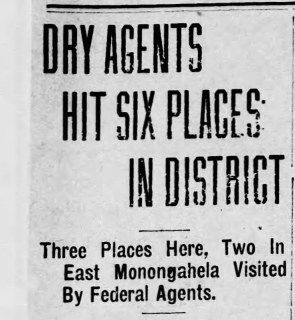
The Daily republican. monongahela.12nov1928

So it’s not surprising to find an article that mentions Christ in The Daily Republican in neighboring  Monongahela, Pennsylvania.[3]

“At East Monogahela, the officers visited the East Monongahela hotel where they arrested Peter Yalch, 46, of Monongahela and Christ Linneman, of Monessen. They were released on bond in the sum of $1,000 for hearings November 20 before U. S. Commissioner Roger Knox. Beer on tap was found here, the officers say. The warrant was sworn out when a federal officer reported that he purchased four drinks at fifty cents each.”

A similar article about the arrests ran in The Monessen Daily Independent, but Christ’s name was not mentioned.[4] There were no newspaper articles after the November 20 hearing date. A Pittsburgh newspaper from May of 1929 reported “10 Sent to Jail in Liquor Cases:”[5]

“ … Christ Linneman, East Monongahela, three months in Westmoreland county jail … ”

I need to check federal and county records for more information about Christ’s case. A year later, Christ is found working as a laborer at the steel mill.[6] This was the first and only time I found him working as anything but a bartender or steward. After 1930, and after the 21st Amendment repealed the 18th Amendment in 1933, Christ continued to work as a bartender.

I’m not sure that Christ was so much of a Black Sheep – just doing his job during a difficult time. I found no other articles about his involvement in other incidents. There were other raids on speakeasies in Monessen, but Christ’s name was not mentioned. I guess it was hard to be a bartender during Prohibition!

Have you found any bartenders in your family? How did Prohibition impact your ancestors?


SOURCES:

[1] Wikipedia (https://wikipedia.com), “Prohibition in the United States,” rev. 14 November 2018.

[2] 1920 U.S. census, Westmoreland County, Pennsylvania, population schedule, Monessen Ward 2, Enumeration District (ED) 152, sheet 2-B, p. 147 (stamped), dwelling 22, family 38, Elizabeth Lineman household; digital images,  Ancestry.com (http://www.ancestry.com : accessed 15 November 2018), citing National Archives microfilm publication T625, roll 1666.

[3] “Dry Agents Hit Six Places In District,” The Daily Republican (Monongahela, Pennsylvania), 12 November 1928, p. 1, col. 1; digital images, Newspapers.com (http://newspapers.com : accessed 31 January 2014).

[4]  “County Detectives and Federal Officer Make Raids Over Week-end,” The Monessen Daily Independent (Monessen, Pennsylvania), 12 November 1928, p. 1, col. 7; digital images, Ancestry.com (http://www.ancestry.com : accessed 31 January 2014).

[5] “10 Sent to Jail in Liquor Cases,” The Pittsburgh Press, 18 May 1929, p. 1, col. 4; digital images, Newspapers.com (http://newspapers.com : accessed 15 November 2018).

[6] 1930 U.S. census, Westmoreland County, Pennsylvania, population schedule, Monessen, Enumeration District (ED) 65-93, sheet 16-A, p. 52 (stamped), dwelling 279, family 346, Elizabeth Linneman household; digital image, Ancestry.com (http://www.ancestry.com : accessed 15 November 2018), citing National Archives microfilm publication T626.

© 2018 LAURA CUBBAGE-DRAPER. ALL RIGHTS RESERVED.

Military Monday – Veterans Day

Today we observe Veterans Day in the United States to honor our military veterans. Yesterday, November 11th, was the 100th anniversary of the armistice signed to end World War I. Armistice Day was first celebrated in 1919 to honor World War I Veterans on this anniversary. You may have heard bells ringing yesterday at the 11th hour of the 11th day of the 11th month. Armistice Day was renamed Veterans Day after World War II to honor all who have served.

Some family trees are full of veterans. Mine has only a few – each generation seemed to be a bit too old or a bit too young to serve in major military events. Military records can provide a wealth of genealogical information, which I’ll post about later, but for today, here are some images of the Veterans in my family.

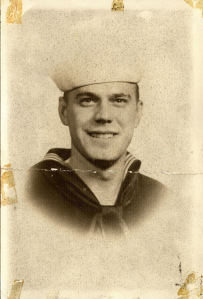
William Arthur Cubbage, my grandfather, World War II, Yeoman Second Class, US Navy


Christian Linnemann, my second great-uncle, World War I, Pvt. 3rd Co. 1st Btn. 155th DB


Frank Rudolph Speck, my great-uncle, US Maritime Service


6db7b-img_0028crop.jpg
Gerhard Linnemann, my second great-uncle, World War I, Cook, Quartermaster Corps


Charles G. Schwenk, my second great-grandfather, Civil War, Sgt, Co. C, 82nd PA Vol (I don’t have any pictures of Charles, this is an image of his Muster-in Roll)

Thank you to all who have served our country in the military. Today we honor you for your service and sacrifice.

Have you found any Veteran’s in your family tree?


© 2018 LAURA CUBBAGE-DRAPER. ALL RIGHTS RESERVED.

World Mental Health Day

Today is World Mental Health Day, which has the “objective of raising awareness of mental health issues around the world and mobilizing efforts in support of mental health.”[1] Though there is more room for improvement, we’ve come a long way in the awareness, acceptance and support of the treatment of mental health issues. But what about our ancestors? Many of us have come across ancestors who may have been dealing with mental health issues.

Gerhard Linnemann was my great-great grandfather and for a long time I didn’t know a lot about him. His daughter, Elizabeth, was the only grandparent that my father knew as a child. He’s told me many stories about her. My father knew that she was born in Germany and had two brothers that lived nearby in Monessen, Pennsylvania. But that was it. My father never knew that Elizabeth’s parents had lived in Monessen too.

A couple of years ago, I was digging deeply into the Linnemann family and other ancestors in Monessen. In searching Monessen’s The Daily Independent newspaper on Ancestry.com, I came across a notice that the funeral of Gerhard “Lineman” had been held the day before.[2] I assumed that this was Elizabeth’s brother, also named Gerhard. I went to search the editions from earlier in the week and they were not digitized or on the site. Those gaps in record collections – ugh!

Several months later, I traveled to Monessen with my father, brother and sister for a family history trip (so much fun!). We went to the Monessen Public Library and spread out to start researching. I went right to the microfilm machines to search the newspapers and this is the front-page news that I found for 9 June 1918:

linneman1

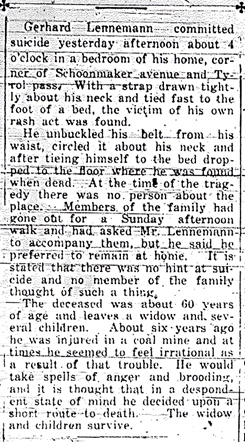
linneman2Gerhard Lennemann committed suicide yesterday afternoon around 4 o’clock in a bedroom of his home, corner of Schoonmaker avenue and Tyler pass. With a strap drawn tightly about his neck and tied fast to the foot of a bed, the victim of his own rash act was found.  

He unbuckled his belt from his waist, circled it about his neck and after tieing himself to the bed dropped to the floor where he was found when dead. At the time of the tragedy there was no person about the place. Members of the family had gone out for a Sunday afternoon walk and had asked Mr. Lennemann to accompany them, but he said he preferred to remain at home. It is stated that there was no hint at suicide and no member of the family thought of such a thing. 

The deceased was about 60 years of age and leaves a widow and several children. About six years ago he was injured in a coal mine and at times he seemed to feel irrational as a result of that trouble. He would take spells of anger and brooding, and it is thought that in a despondent state of mind he decided upon a short route to death. The widow and children survive. [3]

This was not what we were expecting! I called my father over to read the headline – he was shocked. His grandmother had never mentioned her father, let alone his suicide.

The good news, genealogically speaking, was that I had discovered a date and cause of death. Yet I was left with so many questions. At this time in 1918, Gerhard was about 56 years old, and had four grown sons (three in the Monessen area) and a daughter Elizabeth (my father’s beloved grandmother). Elizabeth had just given birth to her second child only a month earlier and lived just a few blocks away.

linneman4

I was able to find a death certificate and coroner’s report for Gerhard “Lenemann,” as he was named in the newspaper article. The coroner’s report was witnessed by Chris and George Lenneman (his sons), and Mike Walko, [?] Laird and Lieut. Abright, with a “decision” of “Suicide by hanging.”[4] The death certificate confirmed the family’s address, his occupation of coal miner, cause of death as “Suiside by hanging to head of bed”, and his place of burial in Grandview Cemetery.[5]

DSC_0029

Gerhard Linneman arrived in the United States in 1903, followed by his wife and children in 1904.[6] I have not been able to locate Gerhard in the 1910 census in either Pennsylvania or West Virginia (where they may have also lived), nor found any coal mining records for him as of now. If he was injured 6 years before his death (around 1912), he most likely would not have been in Monessen, so more research is needed to see where the Linnemanns were before their arrival in Monessen (around 1915-1916).[7]

I’ve spent a lot of time thinking about Gerhard. Was his “anger and brooding” and “despondent state of mind” due to the coal mining accident? Or was there a mental health issue of depression or anxiety or something else? There are so many questions, and I will most likely never find those answers to these. This part of researching my family – wanting to know so much more about the actual person, their “whys” – can be agonizing.

And then there was the rest of the family … Gerhard’s widow, sons and daughter. One son was serving in World War I (when did he find out about his father?), and another would enlist in the next month.[8] His daughter had two young children (one was my grandmother). And his widow. The losses she had already endured before her husband’s suicide were numerous. I’ll save her story for another post. How did this family cope after Gerhard’s death? Was it expected? Did they visit his tombstone? Or were they embarrassed by the stigma of mental health issues? I can only imagine …

IMG_0061

Back to the research trip with my family … my father, shocked, had never heard anything from his family about Gerhard or his death. He never even knew that Gerhard had left Germany. Again, my father’s grandmother Elizabeth (Gerhard’s daughter) was the only grandparent that he knew — in fact, he had lived with her as a child in Pittsburgh, and later she with him New Jersey. In all of that time, she never once mentioned her father or his suicide. Was she still hurt and sad? Or embarrassed? Or had she just moved on, as so many of our ancestors were required to do to survive?

Some family events stay hidden and aren’t passed down to children and grandchildren. Until they are unearthed by a great-great-granddaughter almost 90 years later.

Have you found an ancestor with possible mental health issues?


SOURCES:

[1] “World Mental Health Day – 10 October,” World Health Organization (http://www.who.int/mental_health/world-mental-health-day/en/ : accessed 3 October 2018).

[2] “Local Notes” and “Card of Thanks,” Daily Independent (Monessen, PA), 13 June 1918, p. 1, col. 5; digital images, Ancestry.com (http://www.ancestry.com : accessed 29 September 2017).

[3] “Man Tied Belt Around Neck and Strangled Self While Family Is Absent,” Daily Independent (Monessen, PA), 9 June 1918, p. 1, col. 1; microfilm, Monessen Public Library, Monessen, PA.

[4] Westmoreland County, Pennsylvania, “Coroner Record Dockets,” database, Westmoreland County, Pennsylvania (http://www.co.estmoreland.pa.us : accessed 29 September 2017), entry for Gerhard Lenemann, no. 273, 9 June 1918.

[5] Pennsylvania Department of Health, death certificate 69108 (1918), Gerherd Lenemann; Bureau of Vital Statistics, New Castle.

[6] “Baltimore, Passenger Lists, 1820-1948 and 1954-1957,” digital image, Ancestry.com (http://www.ancestry.com : accessed 2 October 2018), manifest, S. S. Oldenburg, Bremen to Baltimore, arriving 18 December 1903, p. 10, line 8, Gerhart Linnemann; And manifest, S. S. Cassel, Bremen to Baltimore, arriving 31 August 1904, p. 11, line 2, Elisabeth Linnemann; citing National Archives microfilm publication T844, RG 85.

[7] “Woman Found Dead in Bed,” The Monessen Daily Independent (Monessen, PA), 30 July 1935, p. 1, col. 2; digital images, Ancestry.com (http://www.ancestry.com : accessed 29 September 2017).

[8] “Pennsylvania, Veterans Burial Cards, 1777-2012,” digital image, Ancestry.com (http://www.ancestry.com : accessed 2 October 2018), cards for “Gerhard Lineman” and “Charistian Linneman”; citing Pennsylvania Veterans Burial Cards, 1929-1990, Series 1, Pennsylvania Historical and Museum Commission, Harrisburg, Pennsylvania.

© 2018 LAURA CUBBAGE-DRAPER. ALL RIGHTS RESERVED.
Wednesday’s Child – Alma Mary Speck

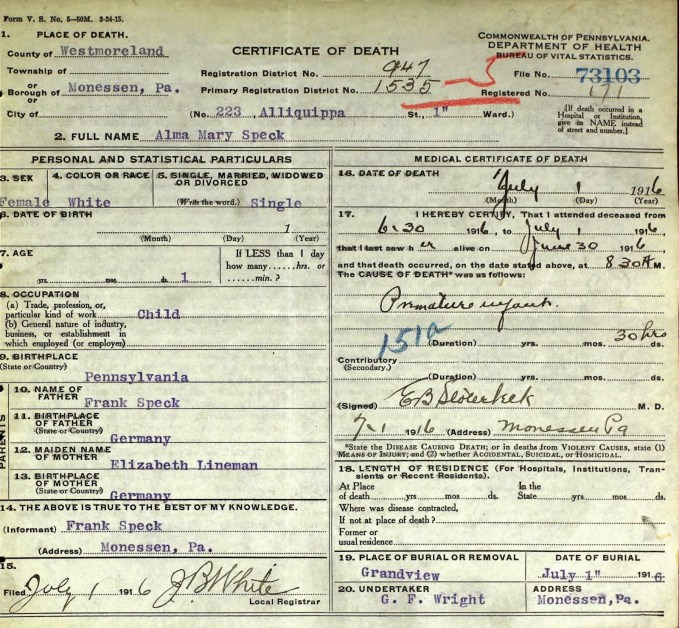
Alma Mary Speck was the daughter of Frank Speck and Elisabeth Linneman Speck and would have been the younger sister of my grandmother, Agnes Speck. Alma was born in Monessen, Pennsylvania and died just one day later. The cause of death was “premature infant” and she was buried that same day at Grandview Cemetery in Monessen.

I never knew of Alma until the Pennsylvania death certificates from 1906-1964 were made available on Ancestry.com. As most of us did when these records were released, I searched for surnames of family that had lived in Pennsylvania to see if I could find death certificates for collateral relatives or ancestors whose date of death was unknown. Through these searches I have found several children that died young between census years, and had no other records of their short lives.

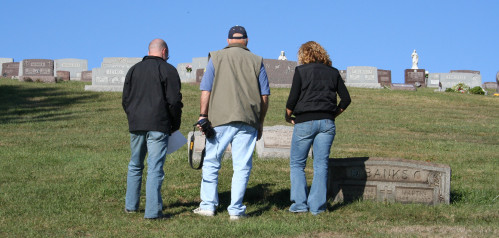
I asked my father about Alma and he was not aware that Frank and Elizabeth had another child. We visited Grandview Cemetery in 2007 and found the tombstone for Alma’s father, Frank Speck, but did not see anything for Alma. She man have been buried in another location or did not have a headstone.

Frank & Elizabeth Speck, 1915

Besides finding another ancestor, I was able to learn a few more things about the Speck family from this record. They were living at 223 Alliquipa Street at the time of her death.

In addition, the name Alma Mary may provide some clues for family names. Their other children seem to have been named after family members … Agnes(Frank’s mother) Elizabeth (Elizabeth and her mother Elizabeth Barbara) and Frank (Frank) Rudolph(Elizabeth’s two brothers who died as children). I know the names of Elizabeth’s siblings and parents, so Mary may be from her side (Maria was Elizabeth’s middle name and her grandmother’s name). Alma could possibly be from Frank’s side of the family, as I do not know much about his family or where they were from in Germany. Maybe Alma was Frank’s sister or grandmother??  Another possible clue to add to the mysterious Speck family.


SOURCE:

Pennsylvania, Pennsylvania Death Certificates, 1906-1963, No. 73103, Alma Mary Speck, 1 July 1916; digital image, Ancestry.com (http://www.ancestry.com : accessed 30 March 2015); citing Pennsylvania (state). Death certificates, 1906-1963. Series 11.90 (1,905 cartons). Records of the Pennsylvania Department of Health, Record Group 11. Pennsylvania Historical and Museum Commission, Harrisburg, Pennsylvania.

© 2017 LAURA CUBBAGE-DRAPER. ALL RIGHTS RESERVED.