Military Monday – Veterans Day

Today we observe Veterans Day in the United States to honor our military veterans. Yesterday, November 11th, was the 100th anniversary of the armistice signed to end World War I. Armistice Day was first celebrated in 1919 to honor World War I Veterans on this anniversary. You may have heard bells ringing yesterday at the 11th hour of the 11th day of the 11th month. Armistice Day was renamed Veterans Day after World War II to honor all who have served.

Some family trees are full of veterans. Mine has only a few – each generation seemed to be a bit too old or a bit too young to serve in major military events. Military records can provide a wealth of genealogical information, which I’ll post about later, but for today, here are some images of the Veterans in my family.

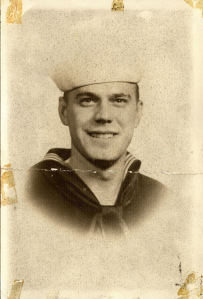
William Arthur Cubbage, my grandfather, World War II, Yeoman Second Class, US Navy


Christian Linnemann, my second great-uncle, World War I, Pvt. 3rd Co. 1st Btn. 155th DB


Frank Rudolph Speck, my great-uncle, US Maritime Service


6db7b-img_0028crop.jpg
Gerhard Linnemann, my second great-uncle, World War I, Cook, Quartermaster Corps


Charles G. Schwenk, my second great-grandfather, Civil War, Sgt, Co. C, 82nd PA Vol (I don’t have any pictures of Charles, this is an image of his Muster-in Roll)

Thank you to all who have served our country in the military. Today we honor you for your service and sacrifice.

Have you found any Veteran’s in your family tree?


© 2018 LAURA CUBBAGE-DRAPER. ALL RIGHTS RESERVED.

Thankful Thursday – Art’s Slide Collection

Mom, Cork, Jeff, Christmas 1953

As we research our family, it’s important that we look at all of the records, notes, documents and photos that our family has collected. Family photos can help us identify people and put them in a time and place in our family history. These images also (quite literally!) put faces to the names that we have been researching!

A few years ago, I scanned all of my paternal grandfather’s slides, as well as those of my parents and my maternal grandparents. My grandfather, Art Cubbage, had just under 600 images that he took from 1953 (when they moved from Pittsburgh to New Jersey) through 1974.

While I am thankful for these wonderful images of my father’s childhood and my grandparent’s lives, I am most thankful that he labeled almost every slide. That’s right. Almost. Every. Slide. My grandfather noted the name of the person(s), the location (if it wasn’t at their home), the month and the year! Wow!

As I have researched my family, these slides have been a great reference for me. Even though that are 20th century images, they still help to piece together our family history. They also tell me a lot about the Cubbage family during those years, and about the individual family members, some that I will profile in later posts. There are also some images of older family members that I never met – great-grandparents and great aunts and uncles.

I have also shown and discussed many of these images with my father, as they are of his family. He has helped me to identify the connections of people in the photos with the Cubbage family (friends, neighbors, coworkers), and a few more details on the events or family members.

If you have found photos in your family research, be sure to show them to your older family members – they may have additional information, or it may jog their memories about some stories or details that you don’t know about!

I’ll share more of these images in future posts, but for now here are a few of my favorites …


July 1955
“July 1955”  This was their home in New Providence, NJ.


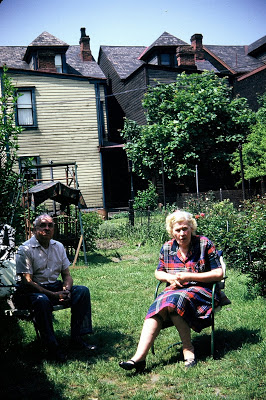
Mem & Pap Pittsburgh July 1954
“Mem & Pap Pittsburgh July 1954” My grandmother Agnes’ parents in their backyard on Thelma Street on the North Side.


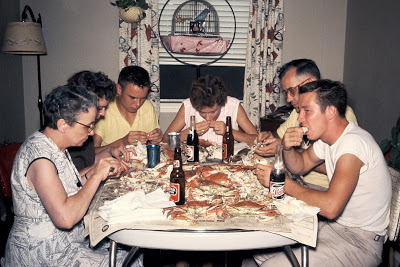
Min's August 1959
“Min’s August 1959” My grandfather Art and his family were enjoying Maryland crab at his sister Minnie’s house in Baltimore.


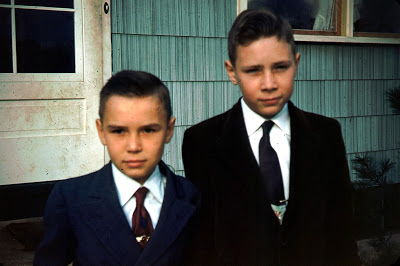
Jeff & Cork Thanksgiving 1954
“Jeff & Cork Thanksgiving 1954” My father and his brother, ages 13 and 10.


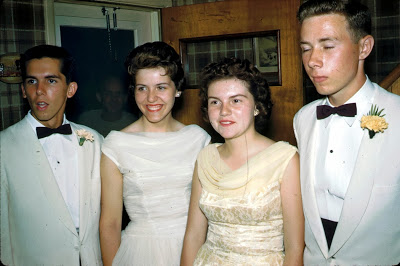
Harry, Janet, Barbara, Cork June 1959
“Harry, Janet, Barbara, Cork June 1959” My father and friends before the senior prom.

© 2018 LAURA CUBBAGE-DRAPER. ALL RIGHTS RESERVED.

Women’s Words Wednesday – Sarah’s Will

So much of our history is recorded, remembered, and influenced by the views our male ancestors. But that’s only part of our story, and I am fascinated by the stories of our female ancestors. I am adding a new blogging category called Women’s Words Wednesday where I will post and reflect on these important words that I have found in my research, in whatever form they arise (letter, photo, official document, etc.).

Sarah (LNU) Cubbage is my 4th great-grandmother. Her husband William died intestate around 1820. Sarah died a few years later, around 1822, but unlike her husband, she did leave a will.[1]

Sarah Will 1Sarah Will 2

I Sarah Cubbage, widow of the late Wm Cubbage Decd of Pine Township Allegheny County State of Pennsylvania, do make this my last wil and Testament as follows, to wit, To my eldest daughter Martha Fletcher I do wil and bequeath on dollar, and to her eldest son known by the name of Samuel Cubbage, I do wil and bequeath one hundred-dollars to be paid to him out of my share of the estate of my husband Wm, Decd. The remaining part of my property I do allow to be equally divided between my sons, John George & Wm Cubbag and daughters Sarah Whitsell, Elizabeth Good, Mary Whitsell, & Jane deer. Except my clothing which I do allow to be divided amongst my daughters over and above their foregoing shares as follows to wit to my daughter Sarah Whitsell I do bequeath my black-silk shawl, provided her or her husband calls on it, to my daughter Elizabeth Good two of my Goats, to My daughter Mary Whitsell and Jane Deer I allow to be equally divided between them, except my spinning-wheel I allow to Jane and my son William’s eldest daughter I do bequeath a two-year-old heipher. And further I do appoint James Hilands Esq of Ross Township and George Whitsell of Pine Township to be my Executors, In witness whereof I have here unto set my hand and seal this thirteenth day of September in the year of our Lord one thousand Eight hundred and twenty two in the presence of

James Hilands                                                                                Sarah Cubbage                                     James McElwain                                                                            X her mark

[Sarah’s will was filed on 27 September 1822.]

I have not found many wills for my female ancestors, especially back as far as the early 1800s. There were estate proceedings found in the Orphan’s Court for her husband William, that continued even after she died. Much of those proceedings had to do with the division of his property to his heirs, including three children who moved west to Ohio and Kentucky. I wonder if Sarah decided to write out a will, or if she was influenced by her family, or if she saw what may have been happening with the division of property.

It is interesting that she left her oldest daughter Martha only one dollar, but to Martha’s oldest son she left one hundred dollars. I have seen other wills in Allegheny County where money was bequeathed to the oldest grandson. Martha had moved to Ohio before William had died, and I have not been able to locate her husband Joseph Fletcher. Sarah names her grandson as “Known by the name of Samuel Cubbage.” which may help in locating the Fletchers.

The rest of Sarah’s property was to be divided among the remaining seven children, with the exception of the special gifts of clothing, spinning wheel and goats that she left to her daughters that also lived in Pine Township. Sarah also left a heifer to the daughter of her son William, who was living in Pittsburgh.

Sarah’s words through her will (that was actually written on paper by another, her mark X indicating that she could not write), helps me to understand her relationship with her children. Rather than having her property divided equally, she had felt it was important enough to specify which items were to go to her children, especially her daughters. I wonder if she saw how the children handled her husband’s estate, and she wanted to be sure her wishes were carried out? Or if there was another reason that she made out a will before she died.

I am thankful to have Sarah’s words and wishes, expressed through her will, to know more about her and her family.


SOURCES:

[1] “Pennsylvania Probate Records, 1683-1994,” digital images, Family Search  (https://familysearch.org : 4 January 2018), Allegheny County, Wills 1808-1830, vol. 2, page 289, no. 221, Sarah Cubbage (1822).

© 2018 LAURA CUBBAGE-DRAPER. ALL RIGHTS RESERVED.

Throwback Thursday – Pittsburgh!

A year ago this week, I spent a some time in Pittsburgh – doing some of my favorite things in one of my favorite cities! It was a wonderful week of research, conference learning, tours and genealogy friends.

I originally started planning this trip when a genea-friend told me that that the Czechoslovak Genealogical Society International Annual Conference was being held in Pittsburgh. I had never attended a CGSI event, but it was a good place to attend one. My husband is mostly Slovak (three of his four grandparents are from Slovakia) and his mother was born in Slovakia before immigrating when she was a little over a year old. I attended two days of the conference and attended some excellent sessions on Slovak land records, Czecho-Slovak history, the Slovak language and more.

The conference offered several tours earlier in the week, and my friend and I attended the “Pittsburgh’s Industry of Our Immigrants” tour on Tuesday. I was very excited for this tour, not for the Slovak focus but because it included places that my father’s ancestors would have worked. We went to the Rivers of Steel National Heritage Area in Homestead during the morning, stopped at Penn Brewery on the North Side for lunch, and ended with a coal mine tour in Tarentum.

IMG_5808
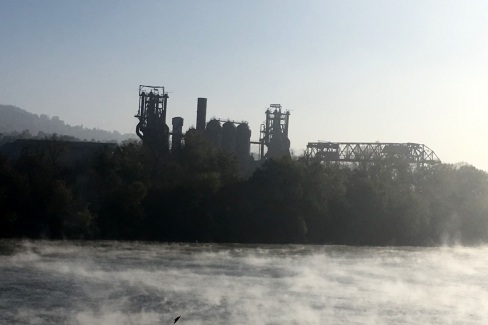
It was a cold morning and the fog on the Monongahela River added an eerie effect to the silhouette of Carrie Furnace.

The highlight of this day for me was the tour at Rivers of Steel, especially the guided tour at Carrie Furnace in Rankin, which had been a part of the Homestead Steel Works. My great grandfather, Charles Cubbage, worked in the blast furnace at Carrie when they lived in Swissvale in the early 1900s. It was an excellent tour where we were able to go into the furnace and learn about the iron making process. I always find it extremely moving to stand in the places where my ancestors stood. And to experience the massive size of Carrie was very powerful (luckily minus insane heat of the furnace). Our tour guide, Susie, was outstanding! If you are in the Pittsburgh area, I highly recommend this tour.

IMG_5817
The people in the foreground show the scale of Carrie Furnace.

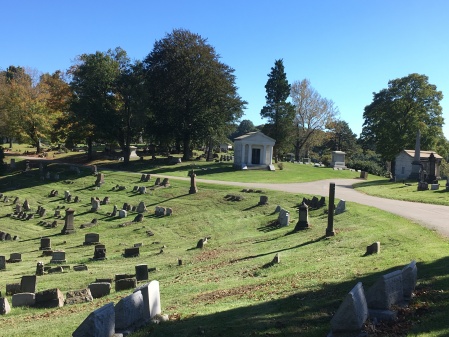
On Wednesday, I spent some time at Homewood Cemetery in the Point Breeze neighborhood. Homewood is an almost 200-acre cemetery which is absolutely beautiful and well-maintained. I had emailed the cemetery ahead of time inquiring about record availability. A wonderful research volunteer, Richard, pulled records for my Cubbage ancestors and had copies of burial books, headstones, plot records, and other cemetery records for me. He even took me around to the locations of the graves (sadly, many of my ancestors didn’t have any tombstones).

IMG_5842

I went back to cemetery after lunch for a wonderful tour led by Jennie Benford. I had read about the tour through a link to a newspaper article on Homewood’s Facebook page. The tour, “Audacious Pioneers: The Women of Section 14”, was about a handful of women who were laid to rest in the section of the cemetery where some of Pittsburgh’s wealthiest were buried. Walking through this section, we saw amazing mausoleums, obelisks and headstones for names like Mellon, Heinz, Frick and more. Jennie researched some fascinating stories about these women, and quite honestly, I’m so jealous of her job! Homewood also offers other tours, and I highly recommend visiting, especially if you have any ancestors who lived in Pittsburgh. The social history around the city and community was so very interesting.

In addition to researching at the Allegheny County Courthouse and the Carnegie Library, I spent most of a day at the Detre Library and Archives at the Heinz History Center. I had been to the museum part of the center years with my family (they have excellent exhibits and awestern Pennsylvania sports museum), but wasn’t able to get to the library. Archivist Sierra Green had presented a session at the CGSI conference about the library, so I changed my plans and went on Friday …  and I am so glad that I did!

The library has an amazing manuscript collection in addition to vertical files, maps, books and more. I did a few searches with their online catalog, so that I arrived with a list of materials to be pulled for research. I found some excellent information including an oral history, school, tax and funeral home records, and town information held in vertical files. The archivists and staff were extremely helpful, and I will be sure to continue my research there on my next trip.

p1000887.jpg
H. Samson, Inc. Records, 1859-1982; MSS 0260, Order Book, April 1875-1881; Detre Library and Archives, John Heinz History Center, Pittsburgh. Entry for Wm. Cubbage, 13 April 1881.

In addition to the conference, research, and tours, I was able to spend some time with my genea-friends Helen and Ellie. We compared research and resources, shared suggestions, and offered ideas for some roadblocks, and I heard about their amazing research trip to Poland! And one of the biggest highlights was having dinner with my dear friend’s son, who is a freshman at CMU.

IMG_5920
Early Sunday Morning at Union Dale Cemetery.

On my way out of town, I stopped at few cemeteries too … it was a full week! I always love visiting and researching in Pittsburgh!

© 2018 LAURA CUBBAGE-DRAPER. ALL RIGHTS RESERVED.

Women’s Words Wednesday

So much of our history is recorded, remembered, and influenced by the views our male ancestors. But that was only part of our story, and I am fascinated by the words of our female ancestors. I am adding a new blogging category called Women’s Words Wednesday where I will post and reflect on these important words that I have found in my research, in whatever form they arise (letter, photo, document or record).

Below is a letter from Sara Logan to Charles Cubbage, my great-grandfather, about Sarah Cubbage, Charles’ sister. [1]

[unreadable along frayed top edge of letter]
Valencia
Dec. 16, 1902

Mr. Charles Cubbage,
Dear Friend –
Will write you a few lines this morning in place of your parents to tell you that Sarah had fallen yesterday evening and got seriously hurt. It was so very icy, and she had gone to the shed to feed the chickens and was lying there when they found her. Her head pains her awfully and her back hurts her too. The Dr was here again this morning and said there was little improvement on her
[unreadable along frayed top edge of letter]
be no change for 48 [?]
She just lies and seems to be sleeping and does not seem to notice any one. Charlie I think poor Sara is quite [unreadable] your Father and Mother are so worried but I know Charlie you will come out if you can and if you do not come out the [unreadable, possibly “next word you” ??] that Sara will be better and fully recovered again and a marked improvement from her present condition.

From,
Sara Logan

Sadly, Sarah Cubbage died on Christmas Day, ten days after her fall. She was 45 years old. I do not know if Charles ever traveled the 30 miles from Swissvale to Penn Township in Butler County to visit his sister before she died. At this time in 1902, only Sarah and her brother James L. were still living at home with their parents – their five brothers, including Charles, had all left Butler County.

But who was Sara Logan? And why did she write the letter “in place” of Charles’ parents, James and Barbara Cubbage? Sara mentioned how worried they were and that her brother should “come out if you can”. Were James and Barbara too distraught to write the letter? These are questions I most likely won’t know the answers to, but get me thinking about the role that women played during a tragedy.

Sarah Cubbage, who never married, worked for many years as a servant in the home of John R. Logan. I am fairly certain that Sara Logan was connected to this family – either a relative of John, or possibly the spouse of one of John’s sons. Sara Logan wanted Charles to travel to see his sister, yet she seemed to stay positive at the end of the letter, hoping that Sarah will be “better and fully recovered.”  What was it like for her to be the bearer of bad news? Did she reach out on her own, or at the request of the parents? And since Sarah Cubbage didn’t survive, did Sara Logan need to write another letter to  Charles, and possibly the other brothers, to let them know about her passing? Or did Sarah’s parents James and Barbara send a letter?

Sarah’s obituary reported that “her death was made harder to those who loved her best by her continued promise of recovery”[2] making it appear that she was improving before she died. It also mentioned that she had for many years “remained in the home of Mr. John R. Logan, deceased, and where she was loved and will be mourned deeply” suggesting a close relationship with the Logan family. The obituary also notes that her brothers in Montana and Washington were unable to attend the funeral, leading me to believe that Charles made the trip from Swissvale to Penn Township.

Sara Logan’s letter to Charles, as well as Sarah Cubbage’s obituary, were found tucked inside of the Cubbage Family Bible, originally owned by her parents, James and Barbara.[3] I’m thankful for Sara’s words that convey part of Sarah’s story.


SOURCES:

[1] Sara Logan (Valencia, Pennsylvania) to “Mr. Charles Cubbage”, letter, 16 December 1902. Privately held by the author.

[2] “In Memoriam,” undated clipping from unidentified newspaper, citing death of Sarah Cubbage on 25 December 1902 in Penn Township, Pennsylvania; privately held by the author.

[3] James and Barbara Cubbage Family Bible, The Holy Bible (New York: American Bible Society, 1870); privately held by the author.

© 2018 LAURA CUBBAGE-DRAPER. ALL RIGHTS RESERVED.