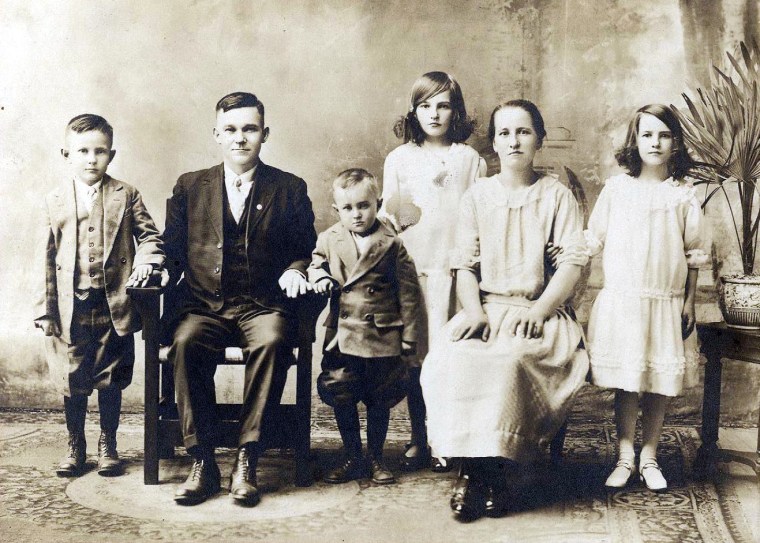
My Ancestors

Tuesday’s Tip – Family Bibles

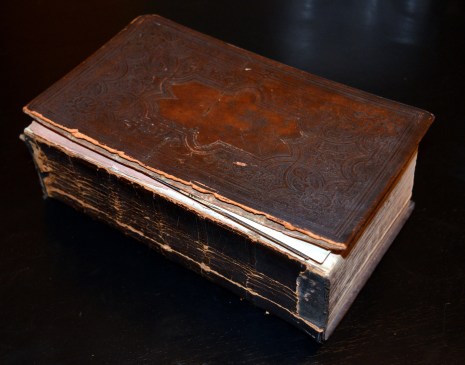
A family Bible is a treasured family heirloom and a valuable resource to the family historian. I am so fortunate to have a family Bible for part of my Cubbage family. This Bible was originally owned by James and Barbara (Black) Cubbage, my second great grandparents. James and Barbara were married in 1852 and lived in Butler County, Pennsylvania.
DSC_1332

Condition and Care

Be aware of the age and condition of your family Bible as you begin to glean genealogical details from the book. While that historical information is valuable, you will also want to preserve the family Bible for future generations. Wrapping the Bible in archival tissue paper and storing in an archival box is the best option for fragile or disintegrating books.

It’s best to transcribe and/or photograph any genealogical writings or other items found in the Bible, so that you do not need to reopen the book each time you need that data. If the Bible and binding are fragile, be sure to photograph rather than place it on a scanner (which will require you to lay the Bible flat and potentially damage the spine). If you are opening an old Bible, use care to support the spine and avoid expanding it so that it is completely flat – use your hands or a pillow to support the book. If there are pages falling out or the cover is no longer attached, do not try to glue or tape the Bible back together. I do not know that there is anything that is safe to add to your heirloom. You can see in the image above that the cover is no longer attached to the Bible.
DSC_1334

Contents

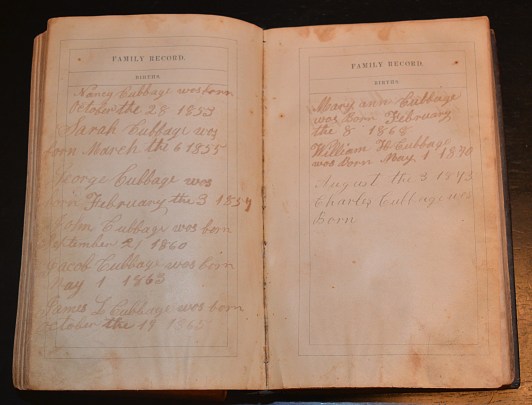
Inside of the Bible is where you may find valuable genealogical information. Many older Bibles had blank pages to record births, marriages and deaths. If your Bible has this information, be sure to photograph and/or transcribe the vital events as it was recorded (spelling errors and all).

Nancy Cubbage was born October the 28 1853
Sarah Cubbage was born March the 6 1855
George Cubbage was born February the 3 1857
John Cubbage was born September 21 1860
Jacob Cubbage was born May 1 1863
James L Cubbage was born October the 19 1865
Mary ann Cubbage was born February the 8 1868
William H Cubbage was born May 1 1870
August the 3 1873 Charles Cubbage was Born

A few more tips:

  • look at pen that was used – was it different for each entry or the same to record all names? This will indicate if each event was recorded near when it happened, or if the information was added to the Bible at the same time.
  • look at the Bible’s publication date and compare this to the dates of recorded events. Again, this will reveal if the events were recorded at a much later time.

In the Cubbage Bible, it appears that the same pen was used for the first eight births (1853-1870) and that Charles’ birth (1873) was recorded in a different pen. In addition, this Bible was published in 1870, therefore it was likely that James and Barbara recorded the first eight births when they received the Bible, and then added Charles’ birth after he was born in 1873.
DSC_1340

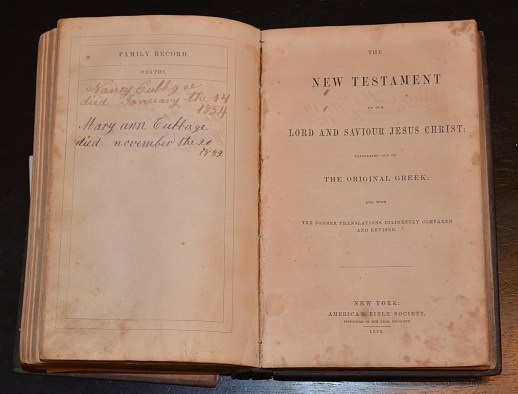
The next page lists two of the children’s deaths (again note the different pens):

Nancy Cubbage died January the 14 1854
Mary ann Cubbage died November the 20 1882

Your family Bible may also contain loose items tucked in the pages, such as newspaper clippings, locks of hair, pressed flowers and other items. The Cubbage Bible had all of these plus a few pictures of unknown children, funeral cards and obituaries, Sunday School lessons, scraps of paper with names and more. Some of the highlights that relate to those children recorded above are:

1908 Cubbage letter
A letter from James L. to Charles in 1908.
image 2009-11-4 0010
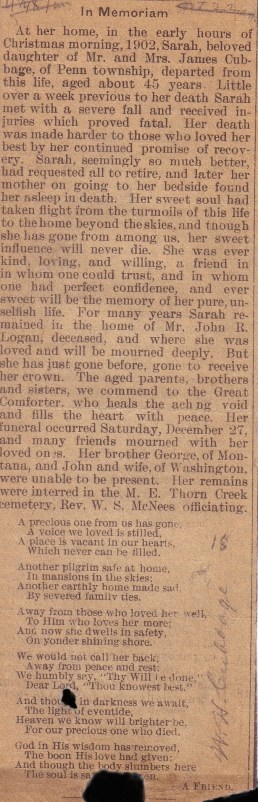
Sarah’s obituary from 1902.

image 2009-11-4 0018  image 2009-11-4 0019


Citation

Be sure to ask your family members who originally owned the Bible, and to whom it was passed until it reached it current location. This may help identify who added information or items to the Bible. For example, my father previously held the Cubbage Bible, which explains my grandfather’s funeral card (1996) in the book. Below is a citation that I used to reference the birth of Charles Cubbage:

[1] James and Barbara Cubbage Family Bible Records, 1853-1902, The Holy Bible (New York: American Bible Society, 1870), “Births”; privately held by the author, Metuchen, New Jersey. This Bible is said to have been passed from Barbara Cubbage (1834-1907) to her son James L. Cubbage (1865-1932) to his nephew William Arthur Cubbage, Sr. (1912-1996) to [living], who passed it to the author in 2017.

I hope that you find this helpful as you explore your family Bible as a genealogical resource. If you have other tips or suggestions, be sure to leave a comment.


SOURCES:

Melissa Barker, “The Archive Lady: Preserving the Family Bible,” Abundant Genealogy, 29 June 2017 (https://abundantgenealogy.com/archive-lady-preserving-family-bible/ : accessed 10 February 12019).

Leslie Albrecht Huber, “Family History Preservation: Preserving Scrapbooks, Family Bible and Other Books”  FamilySearch Blog, 6 April 2017 (https://www.familysearch.org/blog/en/preserving-scrapbooks-family-bible-books/ : accessed 10 February 2019).

“Safely Storing Family Bibles,” Advice from Donia [American Library Association] (http://www.ala.org/alcts/preservationweek/advice/bible-storage : accessed 10 February 2019).

© 2019 LAURA CUBBAGE-DRAPER. ALL RIGHTS RESERVED.
 

Lovely Valentine’s Couples

Happy Valentine’s Day!

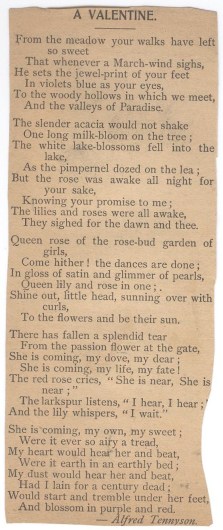
I honor of this day of love, I searched around my family (and hubby’s) for Valentine’s records, marriages or pictures … nothing! Lots of marriages in December and January, but not much happening in February! I did find this clipping in the Cubbage Family Bible … I wonder which family member clipped it from the newspaper?

001

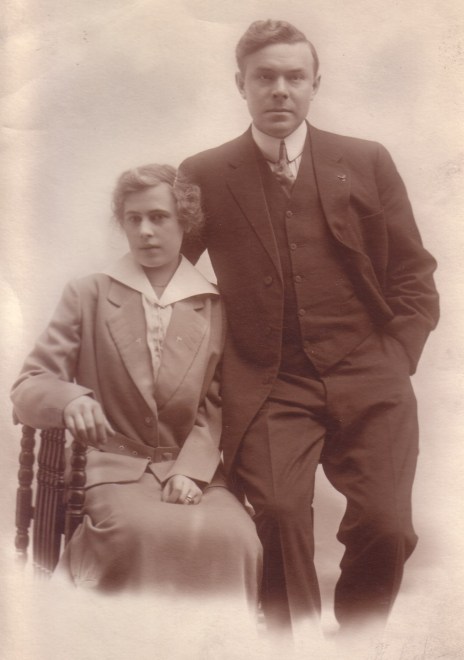
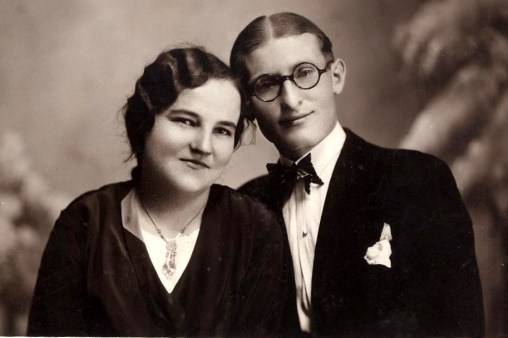
So no Valentine’s marriages or love letters, but here are some of the oldest pictures that I have of family couples:

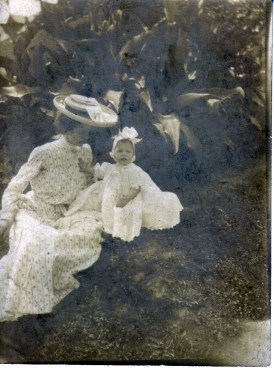
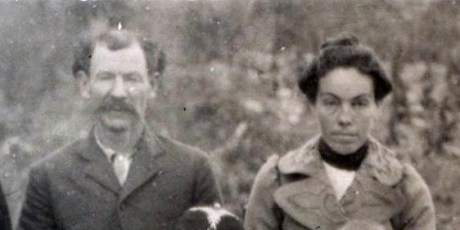
c. 1902, Jackson “Jack” Draper and Sarah Pierce in Bedford, Virginia, married in 1894.
1915, Elizabeth Linnemann and Frank Speck, Monessen or Pittsburgh, Pennsylvania, taken around the time of their marriage.
mary michael
1934, Mary Simko and Michael Petrun, Male Zaluzice, Slovakia, taken around the time of their marriage.
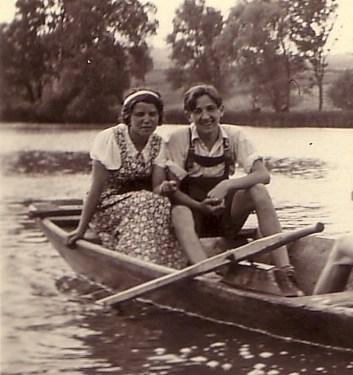
c. 1939, Elise Gegenheimer and Adolf Haberkern, on a date near Stein, Germany, married in 1942.
Agnes & Art
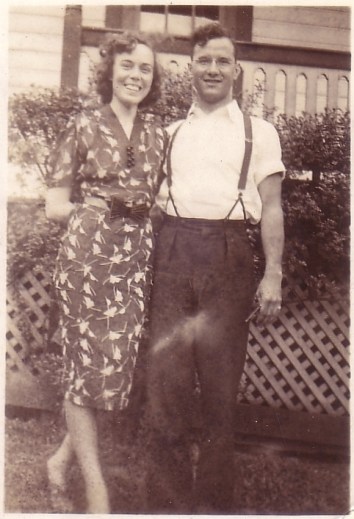
1938, Agnes Speck and Art Cubbage in Monessen, Pennsylvania, married in 1939.

I wish that I had more older pictures, but I am very thankful for those that I do have of our families. Do you have any Valentine’s marriages in your family? How about your oldest family pictures?

© 2019 LAURA CUBBAGE-DRAPER. ALL RIGHTS RESERVED.
Wordless Wednesday – Simko Family Photo

001

I  love this photo of my husband’s grandmother, Mary, and her family! This was taken in New Kensington, Allegheny County, Pennsylvania in the 1920’s. Michael Simko and Mary Kelovcy were born in Zaluzice, Slovakia and arrived in the United States before 1914. Their children, Mary, Susan, Michael and Walter, were all born in Springdale, Allegheny County, Pennsylvania before their parents decided to return to Slovakia in the late 1920s. Mary, Michael and Walter each married in Slovakia and then came back to the United States to stay. Only Susan remained in Slovakia.

© 2019 LAURA CUBBAGE-DRAPER. ALL RIGHTS RESERVED.
#52Ancestors: A Woman I’d Love to Meet

This post is part of Amy Johnson Crow’s “52 Ancestors in 52 Weeks” family history blogging challenge. The prompt for this week is “I’d Like to Meet.”

There are so many ancestors that I’d like to meet – too many to list here (and why). But one that stands out is Polly. She was my husband’s 5th great-grandmother. I’ve done a little bit of research on Polly and her family, but I have much so more to learn as I have not yet been able to get to Bedford County – it’s on my research travel list!

So what makes me want to meet Polly? Her Last Will and Testament. Here’s a quick timeline of her life to give you the basics before we get to her will:

  • Mary “Polly” Boyle was born around 1789 in Virginia, probably in Bedford County.
  • She married Reuben Kerns/Karnes in 1808.
  • Reuben died in 1835 at age 51, leaving Polly with four daughters (the youngest still a teenager, the oldest married). Reuben’s will provided that his plantation and household items were to remain with his wife until her death, and then be divided among his children.

On 21 July 1859, Polly wrote her own will. The will was signed with her mark, indicating that she could not write, and likely dictated it to someone. It starts as standard will:

Polly directed that all of her estate (real and personal) be sold by the executor. The resulting money was to be held by the executor as a trustee for equal use and benefit of her four children (which she named) during their lives and after their death to their children. If any daughters died without heirs, their share was to go to the surviving sisters (or the sisters’ children).

This is the part that caught my eye:

“… it being my wish that no part of the legacies herein given to my children shall be under the control of their present, or any future husbands they may have, or be in any manner liable for their debts.”

Wow. Nothing to the husbands, nor can they control the “legacies.” I have not seen anything like this in a will thus far! The following year, Polly was still living in Bedford County with her youngest daughter, and enumerated next to two other daughters and their husbands (and children).

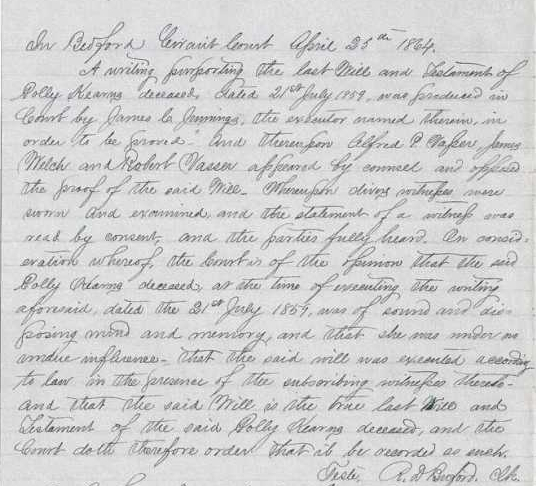
Polly likely died in the early spring of 1864 – her will was proved in April. But not before Polly’s three sons-in-law “opposed the proof of the will.” But the court found it to be a valid will and that Polly “was of sound and disposing mind and memory and that she was under no undue influence.” The will was to be executed according to the law, and the court ordered that it was to be recorded as it was written.

So they opposed the will! I wonder if these men knew about her stipulations, or if they learned it after Polly’s death? And why did Polly exclude them for having control of her estate? Did she know something about them? Did she feel that her daughters married poorly?

Back to the 1860 census … Polly’s real estate was valued at $1000, which was an average value compared to those who lived nearby. But the daughters who next next-door did not own any land, and their personal property was valued at much less than Polly’s. Were these sons-in-law just looking for her money? So many questions!

1860 census polly

And what about Polly? This woman – at a time when women were just beginning to be allowed to own property (let alone control it without a guardian) – wrote a will that clearly didn’t permit her sons-in-law to control any of the estate that would go to her daughters. I wonder what lead her make this stipulation in her will. Was it the husbands, or did she want to give her daughters the ability to control their own assets?

Again, I have much more to learn about Polly, her daughters, and their husbands. She is definitely an ancestor that I’d love to meet one day. I’d have so many questions for her!

Have you found any interesting wills? Which ancestor would you like to meet?

© 2019 LAURA CUBBAGE-DRAPER. ALL RIGHTS RESERVED.
National Handwriting Day & Signatures

Today is National Handwriting Day, which was established in 1977 by the Writing Instrument Manufacturers Association (who knew there was such an association!).[1] It was to be held on January 23rd which is John Hancock’s birthday, in honor of his famous signature on the Declaration of Independence. Rather than comment on our current digital world and its replacement of handwriting and penmanship, I’ll look at one of my favorite finds in genealogical documents … signatures!

I usually do the happy dance when I am able to find a document or record of ancestor, but I am especially happy when it includes a signature. I find signatures to be such a personal part of what can be sterile or factual document. I can see a piece of this person on the page. I often picture him or her signing the document and wonder what was going through their minds at the time, especially since these can be on a will, naturalization or draft record. Below are some of the tangible marks left by my family.

Charles Cubbage
My great-grandfather, Charles A. Cubbage’s signature on his will.[2]

Charles Swank
My 2nd great-grandfather, Charles G. Schwenk’s Civil War Pension Record (note the variant spelling of his name).[3]
Christ Linneman
My 2nd great-uncle, Christian Linneman’s World War I Draft Card.[4]
Anna Babai
My husband’s great-grandmother, Anna Babai’s Petition for Naturalization (note the variant spelling of her name).[5]
Sarah CUbbage
My 4th great-grandmother, Sarah Cubbage’s mark left on her will.[6]

SOURCES:

[1] Jennie Cohen, “A Brief History of Penmanship on National Handwriting Day,” History.com (http://www.history.com/news/a-brief-history-of-penmanship-on-national-handwriting-day/ : accessed 10 January 2018), A+E Networks, 2012.

[2] Westmoreland County, Pennsylvania, estate file 346, Charles A. Cubbage (1939), Register of Wills, Orphan’s Court, Greensburg.

[3] Declaration for Increase of Invalid Pension, 15 September 1890, Charles G. Schwenk/Swank (Pvt. Co. A and 1st Sgt. Co. C, 82nd Pennsylvania Inf., Civil War), pension application no. 694362, certificate no. 454879, Case Files of Approved Pension Applications … 1861-1934; Civil War and Later Pension Files; Department of Veterans Affairs, Record Group 15; National Archives, Washington, D.C.

[4] “United States, World War I Draft Registration Cards, 1917-1918,” index and images, Ancestry.com (https://ancestry.com : accessed 10 January 2018), card for Christ Linneman, serial no. 2883, no. 163, Local Draft Board No. 8, Monessen, Westmoreland County, Pennsylvania; citing World War I Selective Service System Draft Registration Cards, 1917-1918, NARA microfilm publication M1509; imaged from Family History Library roll 1927074.

[5] Anna Babay petition for naturalization (1940), naturalization file no. 26784, Middle District of Pennsylvania; Records of the District Courts of the United States; Record Group 21; National Archives-Mid Atlantic Region, Philadelphia.

[6] “Pennsylvania Probate Records, 1683-1994,” digital images, FamilySearch (https://familysearch.org : 4 January 2018), Allegheny County, Wills 1808-1830, vol. 2, page 289, no. 221, Sarah Cubbage (1822).

© 2019 LAURA CUBBAGE-DRAPER. ALL RIGHTS RESERVED.