My Ancestors

Favorite Photo Friday – James & Barbara Cubbage

Above my desk I have two large images of my second great-grandparents:

DSC_1154

These images were in possession of my grandfather, then my father, before being passed down to me in 2014. My guess is that James and Barbara sat for these in the 1890s in Butler County, Pennsylvania.

James Cubbage was born in 1829 in Allegheny County to John Cubbage and Mary Jane Stoup.[1] He moved to Butler County around 1850 and married Barbara in 1852.[2] Barbara Black was born in 1837 in Butler County to John Black and Margaret Sarver.[3]

James and Barbara had nine children between 1853 and 1873 (20 years of childbearing!).[4] They did not own any property until 1873, just before their last child was born (my great-grandfather Charles).[5] James died in 1906 in Penn Township, Butler County.[6] Barbara died just under a year later.[7]

I love having these images over my desk … they inspire me as I research, write and learn more about my ancestors. I see some other Cubbage men in the face of James – especially in the eyes. Barbara looks pretty serious … maybe even stern a bit stern, but it might have been the 20 years of childbearing. Or it reflects what life was like with a large family in rural western Pennsylvania. Or maybe it was because that around this time, five of her sons began to move away from Butler County and scatter around the country.

These treasured family heirlooms bring me joy every day. Do you have any family photos or images that are important to you?


SOURCES:

[1] Pennsylvania Department of Health, certificate of death no. 13513 (1906), James Cubbage; Bureau of Vital Statistics, New Castle.

 [2] 1850 U.S. census, Butler County, Pennsylvania, population schedule, Buffalo Township, p. 22 (stamped), dwelling 308, family 310, John Black household; digital image, Ancestry.com (https://ancestry.com : accessed 28 February 2018), citing National Archives microfilm publication M432, roll 760. Also, James Cubbage, drinking glass, ca. 1852, privately held by William Arthur Cubbage, Jr. [address for private use,] Long Valley, New Jersey. The glass is etched with “James Cubbage married 1852.”

[3] Butler County, Pennsylvania, Probate file B-120, will of John Black (1851). Also, “In Memoriam – Barbara Cubbage,” obituary from unidentified newspaper; photocopy privately held by William Arthur Cubbage, Jr. [address for private use,] Long Valley, New Jersey, ca. 1975.

[4] James and Barbara Cubbage Family Bible Records, 1853-1902, The Holy Bible (New York: American Bible Society, 1870), “Births”; privately held by the author, Metuchen, New Jersey.

[5] Butler County, Pennsylvania, Deed Book 36: 150-151, James Bartley and wife to Barbara Cubbage, 28 April 1873; Recorder of Deeds, Butler.

[6] Pennsylvania Department of Health, certificate of death no. 13513 (1906), James Cubbage.

[7] Pennsylvania Department of Health, certificate of death no. 11927 (1907), Barbara Cubbage.

© 2018 LAURA CUBBAGE-DRAPER. ALL RIGHTS RESERVED.
Fearless Females Friday – Girlfriends!

A good friend is a connection to life – a tie to the past, a road to the future, the key to sanity in a totally insane world. ~Lois Wyse

I am fascinated by the stories of our women ancestors, and those Fearless Females in our family trees. We think of them as mothers, daughters, grandmothers, aunties … and also girlfriends.

As November comes to an end, and after the last week’s day of Thanksgiving, I’ve been thinking of how grateful I am for my girlfriends. Through every season these women have shared insight, laughs, feedback and love.

I wonder if my ancestor’s girlfriends were just as important to them? They had sisters, neighbors and friends. And it certainly “takes a village to raise a child.” In very different ways than it does for me.

These women took care of their families, lost children and husbands to death and illness, had sons (and husbands) go off to war, moved across the state (or the world). I would imagine that they absolutely needed that network, and that women’s friendships were just as important to my ancestors as they are for me today.

I have always wished for a journal or diary of one of my ancestors. One that might tell me about their lives. But alas, I do not. Still, I can guess a little about their girlfriends from these pictures.

Mem_0001
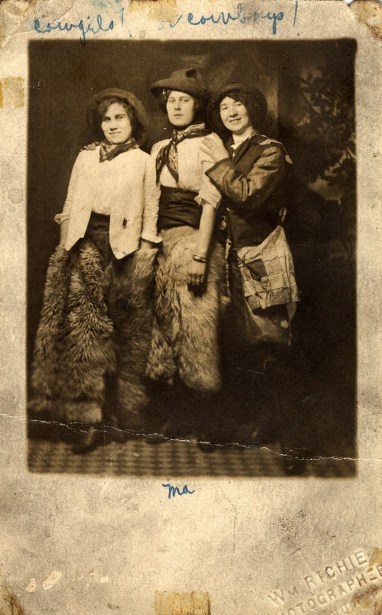
My great-grandmother, Elizabeth Linneman Speck, circa 1920. She is flanked by two friends and they appear to be dressed up for something. At the top her daughter wrote “cowgirls? or cowboys!”
Barbara Elizabeth
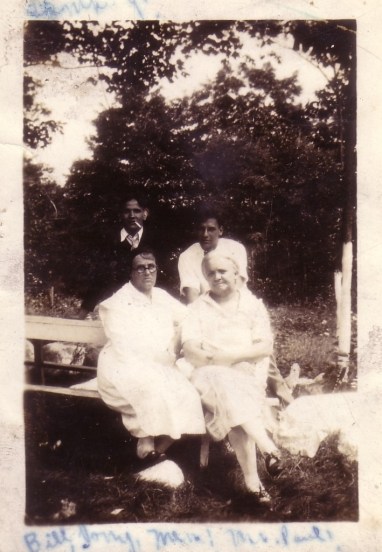
My 2nd great-grandmother Barbara Elizabeth Linneman. She looks so serious, but had been through a lot (I’ll post on her later); her friends had to have been important. She’s with “Mrs. Paul” a neighbor in Monessen in the 1920s.
Agnes_0001
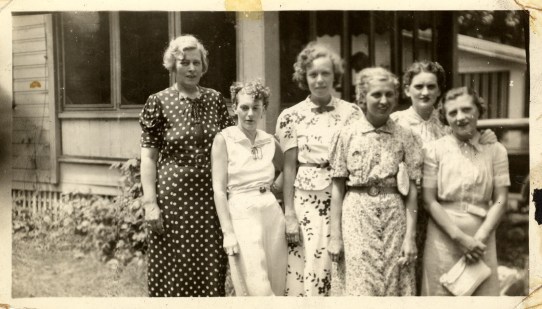
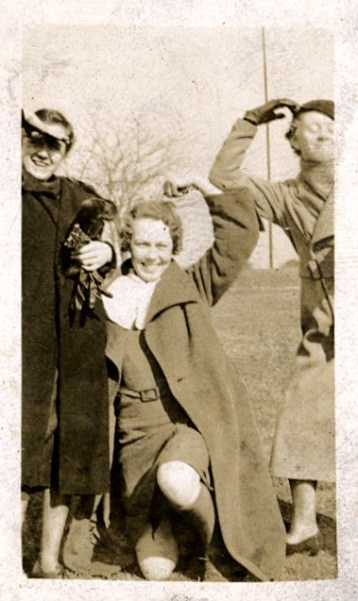
My grandmother, Agnes Speck mugging for the camera with girlfriends, circa 1937.
501
My grandmother, Elise Gegenheimer Haberkern, having fun with a friend in 1961.
Irene, Agnes, Virginia August 1955
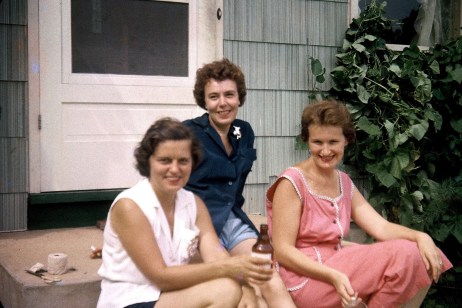
Agnes Speck Cubbage with neighbors Irene and Virginia in New Providence, 1955.
Neptune Cottage
Elizabeth Linneman Speck, with her daughter Agnes and fiends. The back of the photo has “Neptune Cottage 1939” written on it.

Treasure your girlfriends and the power of women’s friendships.

Black Sheep Sunday – Arrest by Prohibition Agents

Today is the anniversary of the beginning of Prohibition. One hundred years ago, just a week after Armistice Day and the end of World War I, the US Congress passed the temporary Wartime Prohibition Act. This banned the sale of alcoholic beverages containing greater than 1.28% alcohol, and was intended to save grain for the war effort. This was followed by the Eighteenth Amendment, which was ratified in January 1919, and the country went dry in January of 1920.[1]

The result was a large underground network of illegal drinking clubs: speakeasies. I have wondered how my ancestors may have been affected by Prohibition. I found out with a newspaper search looking for my Linneman family.

Christian “Christ” Linneman was my great-grandmother’s oldest brother. He never married and lived much of his life with his mother or siblings in Monessen, a steel town south of Pittsburgh. I recently wrote about his father’s suicide here. My father remembers Christ as being quiet and and reading his Bible.

Christian &  Elizabeth Linneman
Christian Linneman with his sister Elizabeth, my great-grandmother.

Christ worked consistently as a bartender in Monessen – at a hotel, the VFW club, or the Turner Hall, a German social club. He served in World War I from 1918-1919, and in 1920 both Christ and his mother were “stewards” at the Turner Hall.[2]

The Daily republican. monongahela.12nov1928

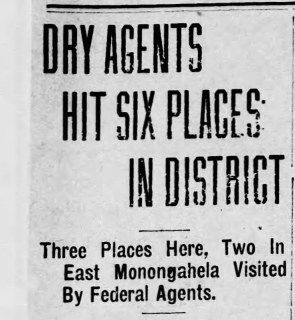
So it’s not surprising to find an article that mentions Christ in The Daily Republican in neighboring  Monongahela, Pennsylvania.[3]

“At East Monogahela, the officers visited the East Monongahela hotel where they arrested Peter Yalch, 46, of Monongahela and Christ Linneman, of Monessen. They were released on bond in the sum of $1,000 for hearings November 20 before U. S. Commissioner Roger Knox. Beer on tap was found here, the officers say. The warrant was sworn out when a federal officer reported that he purchased four drinks at fifty cents each.”

A similar article about the arrests ran in The Monessen Daily Independent, but Christ’s name was not mentioned.[4] There were no newspaper articles after the November 20 hearing date. A Pittsburgh newspaper from May of 1929 reported “10 Sent to Jail in Liquor Cases:”[5]

“ … Christ Linneman, East Monongahela, three months in Westmoreland county jail … ”

I need to check federal and county records for more information about Christ’s case. A year later, Christ is found working as a laborer at the steel mill.[6] This was the first and only time I found him working as anything but a bartender or steward. After 1930, and after the 21st Amendment repealed the 18th Amendment in 1933, Christ continued to work as a bartender.

I’m not sure that Christ was so much of a Black Sheep – just doing his job during a difficult time. I found no other articles about his involvement in other incidents. There were other raids on speakeasies in Monessen, but Christ’s name was not mentioned. I guess it was hard to be a bartender during Prohibition!

Have you found any bartenders in your family? How did Prohibition impact your ancestors?


SOURCES:

[1] Wikipedia (https://wikipedia.com), “Prohibition in the United States,” rev. 14 November 2018.

[2] 1920 U.S. census, Westmoreland County, Pennsylvania, population schedule, Monessen Ward 2, Enumeration District (ED) 152, sheet 2-B, p. 147 (stamped), dwelling 22, family 38, Elizabeth Lineman household; digital images,  Ancestry.com (http://www.ancestry.com : accessed 15 November 2018), citing National Archives microfilm publication T625, roll 1666.

[3] “Dry Agents Hit Six Places In District,” The Daily Republican (Monongahela, Pennsylvania), 12 November 1928, p. 1, col. 1; digital images, Newspapers.com (http://newspapers.com : accessed 31 January 2014).

[4]  “County Detectives and Federal Officer Make Raids Over Week-end,” The Monessen Daily Independent (Monessen, Pennsylvania), 12 November 1928, p. 1, col. 7; digital images, Ancestry.com (http://www.ancestry.com : accessed 31 January 2014).

[5] “10 Sent to Jail in Liquor Cases,” The Pittsburgh Press, 18 May 1929, p. 1, col. 4; digital images, Newspapers.com (http://newspapers.com : accessed 15 November 2018).

[6] 1930 U.S. census, Westmoreland County, Pennsylvania, population schedule, Monessen, Enumeration District (ED) 65-93, sheet 16-A, p. 52 (stamped), dwelling 279, family 346, Elizabeth Linneman household; digital image, Ancestry.com (http://www.ancestry.com : accessed 15 November 2018), citing National Archives microfilm publication T626.

© 2018 LAURA CUBBAGE-DRAPER. ALL RIGHTS RESERVED.
Military Monday – Veterans Day

Today we observe Veterans Day in the United States to honor our military veterans. Yesterday, November 11th, was the 100th anniversary of the armistice signed to end World War I. Armistice Day was first celebrated in 1919 to honor World War I Veterans on this anniversary. You may have heard bells ringing yesterday at the 11th hour of the 11th day of the 11th month. Armistice Day was renamed Veterans Day after World War II to honor all who have served.

Some family trees are full of veterans. Mine has only a few – each generation seemed to be a bit too old or a bit too young to serve in major military events. Military records can provide a wealth of genealogical information, which I’ll post about later, but for today, here are some images of the Veterans in my family.

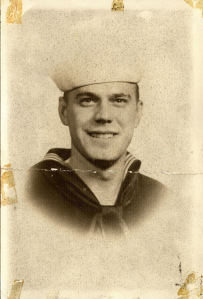
William Arthur Cubbage, my grandfather, World War II, Yeoman Second Class, US Navy


Christian Linnemann, my second great-uncle, World War I, Pvt. 3rd Co. 1st Btn. 155th DB


Frank Rudolph Speck, my great-uncle, US Maritime Service


6db7b-img_0028crop.jpg
Gerhard Linnemann, my second great-uncle, World War I, Cook, Quartermaster Corps


Charles G. Schwenk, my second great-grandfather, Civil War, Sgt, Co. C, 82nd PA Vol (I don’t have any pictures of Charles, this is an image of his Muster-in Roll)

Thank you to all who have served our country in the military. Today we honor you for your service and sacrifice.

Have you found any Veteran’s in your family tree?


© 2018 LAURA CUBBAGE-DRAPER. ALL RIGHTS RESERVED.
Thankful Thursday – Art’s Slide Collection

Mom, Cork, Jeff, Christmas 1953

As we research our family, it’s important that we look at all of the records, notes, documents and photos that our family has collected. Family photos can help us identify people and put them in a time and place in our family history. These images also (quite literally!) put faces to the names that we have been researching!

A few years ago, I scanned all of my paternal grandfather’s slides, as well as those of my parents and my maternal grandparents. My grandfather, Art Cubbage, had just under 600 images that he took from 1953 (when they moved from Pittsburgh to New Jersey) through 1974.

While I am thankful for these wonderful images of my father’s childhood and my grandparent’s lives, I am most thankful that he labeled almost every slide. That’s right. Almost. Every. Slide. My grandfather noted the name of the person(s), the location (if it wasn’t at their home), the month and the year! Wow!

As I have researched my family, these slides have been a great reference for me. Even though that are 20th century images, they still help to piece together our family history. They also tell me a lot about the Cubbage family during those years, and about the individual family members, some that I will profile in later posts. There are also some images of older family members that I never met – great-grandparents and great aunts and uncles.

I have also shown and discussed many of these images with my father, as they are of his family. He has helped me to identify the connections of people in the photos with the Cubbage family (friends, neighbors, coworkers), and a few more details on the events or family members.

If you have found photos in your family research, be sure to show them to your older family members – they may have additional information, or it may jog their memories about some stories or details that you don’t know about!

I’ll share more of these images in future posts, but for now here are a few of my favorites …


July 1955
“July 1955”  This was their home in New Providence, NJ.


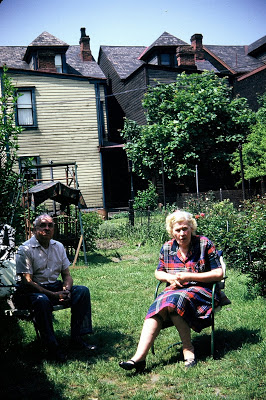
Mem & Pap Pittsburgh July 1954
“Mem & Pap Pittsburgh July 1954” My grandmother Agnes’ parents in their backyard on Thelma Street on the North Side.


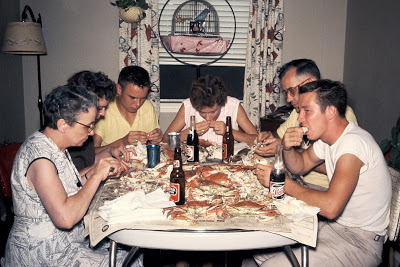
Min's August 1959
“Min’s August 1959” My grandfather Art and his family were enjoying Maryland crab at his sister Minnie’s house in Baltimore.


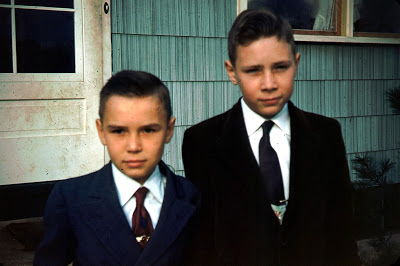
Jeff & Cork Thanksgiving 1954
“Jeff & Cork Thanksgiving 1954” My father and his brother, ages 13 and 10.


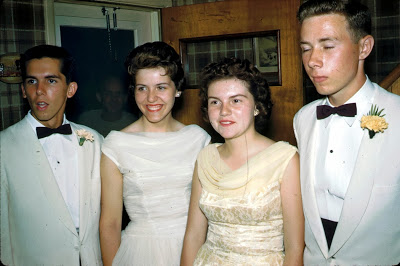
Harry, Janet, Barbara, Cork June 1959
“Harry, Janet, Barbara, Cork June 1959” My father and friends before the senior prom.

© 2018 LAURA CUBBAGE-DRAPER. ALL RIGHTS RESERVED.